
Wisdom For Your Dome
Cortisol and Sleep: Why Stress Wrecks Your Nights
Reviewed by Dr. Pegah Panahi, MD — 25+ years in holistic and cannabinoid medicine.
Quick answer: Cortisol is a timing hormone that should peak in the morning and bottom out around midnight — chronic stress flips that schedule, leaving you wired at 11PM and groggy at dawn. Elevated nighttime cortisol raises heart rate, temperature, and mental arousal, and is behind many 3AM wake-ups. The fix is retraining the rhythm: hard cutoffs on work and screens, dim evenings, slow breathing, and a consistent schedule.
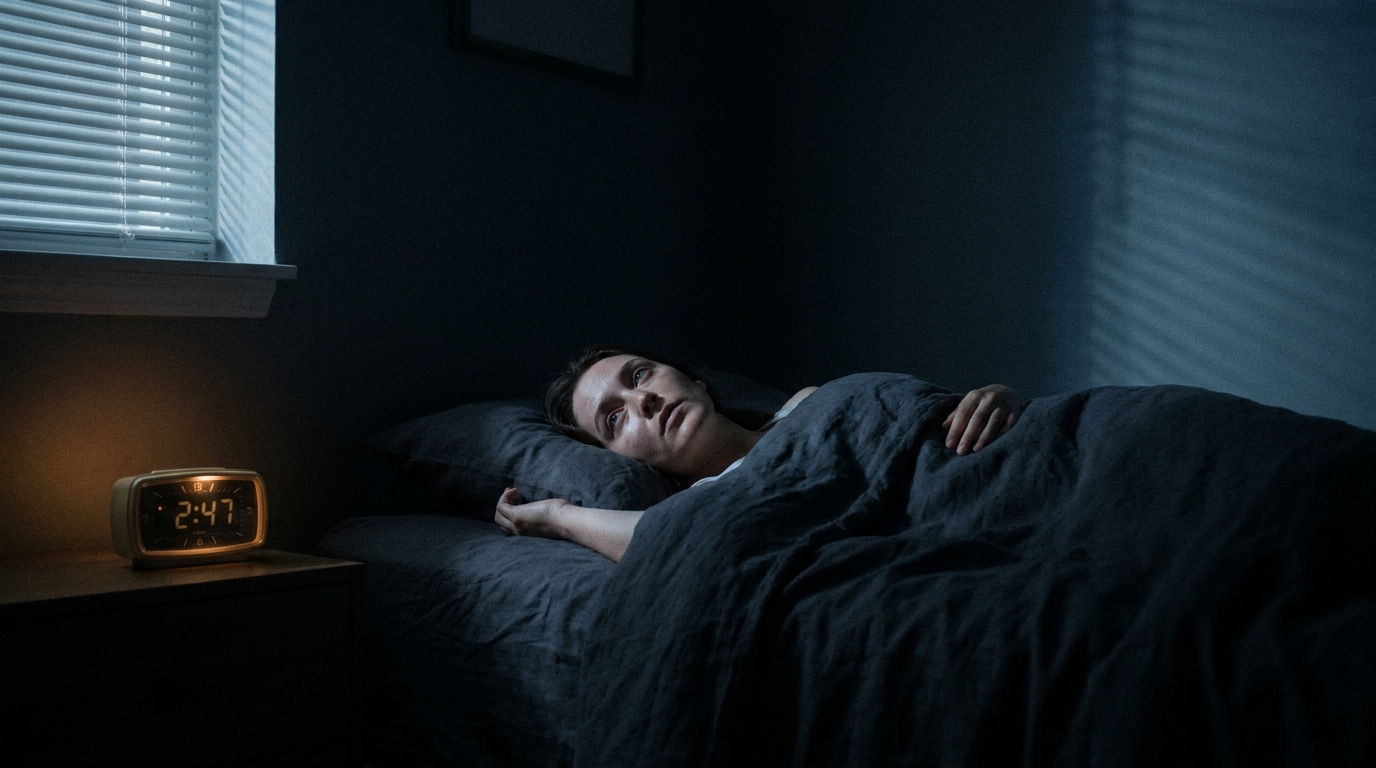
You know the drill. Terrible day, brain on fire, and the second your head hits the pillow your body decides it's go time. That's not bad luck — that's cortisol and sleep having a turf war, and cortisol is winning. Cortisol is your body's main stress hormone, and when it's spiking at 11PM instead of 7AM, you get the worst of both worlds: wired at midnight, dead at dawn. Here's the science of why stress wrecks your nights — and what actually helps you power the system down.
The Short Version (For the Sleep-Deprived)
- Cortisol is a timing hormone. It's supposed to peak in the morning to wake you up and bottom out at night so you can sleep. Chronic stress flips that schedule.
- High nighttime cortisol = "tired but wired." Exhausted body, racing brain, staring at the ceiling.
- It's also behind the 3AM wake-up. Stress can pull your morning cortisol rise hours earlier than it should be.
- You can't think your way out. But you can build a wind-down routine that signals your nervous system to stand down.
What Cortisol Actually Is (It's Not the Villain)
Cortisol gets a bad rap, but you'd be dead without it. It's produced by your adrenal glands and it regulates blood sugar, blood pressure, metabolism, and your sleep-wake cycle. It's the hormone that gets you out of bed in the morning without a crane.
The problem isn't cortisol. The problem is cortisol at the wrong time. Your body runs it on a strict schedule called the diurnal cortisol rhythm: a big spike about 30–45 minutes after you wake up (the "cortisol awakening response"), a steady decline through the day, and a low point around midnight. That low point is when deep sleep is supposed to happen.
Chronic stress — deadlines, doom-scrolling, that email you keep re-reading — keeps your HPA axis (the brain-to-adrenal stress circuit) firing long past business hours. The curve flattens. Cortisol stays elevated into the night. And elevated cortisol and sleep are fundamentally incompatible, because cortisol's entire job is to keep you alert.
How Stress Hijacks Your Nights
1. The "Tired but Wired" Trap
Elevated evening cortisol raises heart rate, body temperature, and mental arousal — the exact opposite of what your body needs to initiate sleep. Your muscles are begging for the mattress while your brain is running threat simulations. That's not a character flaw. That's biochemistry.
2. The 3AM Ambush
Cortisol naturally starts creeping up in the second half of the night to prep you for waking. Under chronic stress, that rise comes early and comes hot — which is a major reason so many stressed people snap awake between 2 and 4AM with a racing mind. If that's your nightly feature presentation, read our full breakdown of why you wake up at 3AM every night.
3. Shallower, Junkier Sleep
Even when you do sleep, high cortisol is associated with less slow-wave (deep) sleep and more fragmented sleep architecture. You technically got eight hours; you feel like you got four. Then you're groggy, so you stress about being tired, which raises cortisol, which wrecks the next night. Welcome to the loop.
How to Lower Cortisol Before Bed (Without Moving to a Cabin)
You can't eliminate stress. You can stop marinating in it after dark. What helps:
- Set a hard cutoff for work and news. Every stressful input after 9PM is a cortisol order your adrenals will happily fill. That includes the phone — doom-scrolling is a cortisol drip-feed.
- Dim the lights an hour before bed. Bright light at night suppresses melatonin and keeps your arousal system engaged.
- Do a "brain dump." Write tomorrow's worries on paper. Externalizing them tells your brain it can stop rehearsing.
- Slow breathing, 5 minutes. Long exhales activate the parasympathetic nervous system — the built-in off switch for the stress response.
- Keep a consistent schedule. Your cortisol rhythm is trainable. Same bedtime, same wake time, even on weekends. A structured nighttime routine is the single highest-leverage move here.
- Watch the late caffeine and sugar. Both can amplify the stress response right when you're trying to dial it down.
Built for Nights Like These: Doze Drops
Doze Drops are doctor-formulated sleep gummies designed to help you wind down when your brain won't shut up: 50mg full-spectrum CBD + 20mg CBN + 20mg CBG per serving. Zero sugar (see the loop above), zero melatonin grogginess, non-habit-forming. $29.99, backed by a 30-day guarantee.
Where CBD Fits Into the Cortisol Picture
To be blunt, because that's how we operate: CBD is not a stress cure, and anyone telling you otherwise is selling gas station CBD. What we can say is that many people reach for full-spectrum CBD as part of a wind-down routine because it may support a sense of calm and help take the edge off an overactive evening brain — which is exactly the state that keeps cortisol and sleep at war. Research into cannabinoids and the stress response is ongoing and promising, but it's early.
If racing thoughts are your main saboteur, our guide to CBD for racing thoughts covers how people use it to quiet the mental noise at night — no melatonin hangover included.
Frequently Asked Questions
Can high cortisol keep you awake at night?
Yes. Cortisol is an alerting hormone — elevated levels at night raise heart rate, body temperature, and mental arousal, making it harder to fall asleep and stay asleep. Nighttime is when cortisol should be at its lowest.
What time should cortisol be lowest?
In a healthy rhythm, cortisol bottoms out around midnight and stays low through the first half of the night, then gradually rises toward morning to help you wake. Chronic stress can flatten or shift this curve.
How can I lower cortisol before bed?
Consistent sleep and wake times, dim lights in the evening, a hard cutoff on work and screens, slow breathing exercises, and writing down tomorrow's worries all help signal your nervous system to downshift. Avoid late caffeine and sugar.
Does CBD lower cortisol?
Research on cannabinoids and the stress response is ongoing, and CBD is not a treatment for stress or any condition. Many people find full-spectrum CBD useful as part of a nightly wind-down routine because it may support relaxation and a calmer evening headspace.
The Bottom Line
Your sleeplessness isn't random and it isn't weakness — it's a stress hormone doing its job on the wrong shift. Fix the inputs (light, screens, stimulation, schedule), give your nervous system a real off-ramp each night, and be patient: cortisol rhythms retrain over weeks, not days. Your nights are recoverable. Your group chat can wait until morning.
These statements have not been evaluated by the Food and Drug Administration (FDA). This product is not intended to diagnose, treat, cure, or prevent any disease. The information provided is for educational purposes only and is not medical advice. Always consult a healthcare professional before starting any new supplement, especially if you are pregnant, nursing, have a medical condition, or take medications. Results may vary. Everwell does not make any health claims regarding its CBD products.