Wisdom For Your Dome
CBD for Athletes: Recovery, Sleep, and Cortisol
Reviewed by Dr. Pegah Panahi, MD — 25+ years in holistic and cannabinoid medicine.
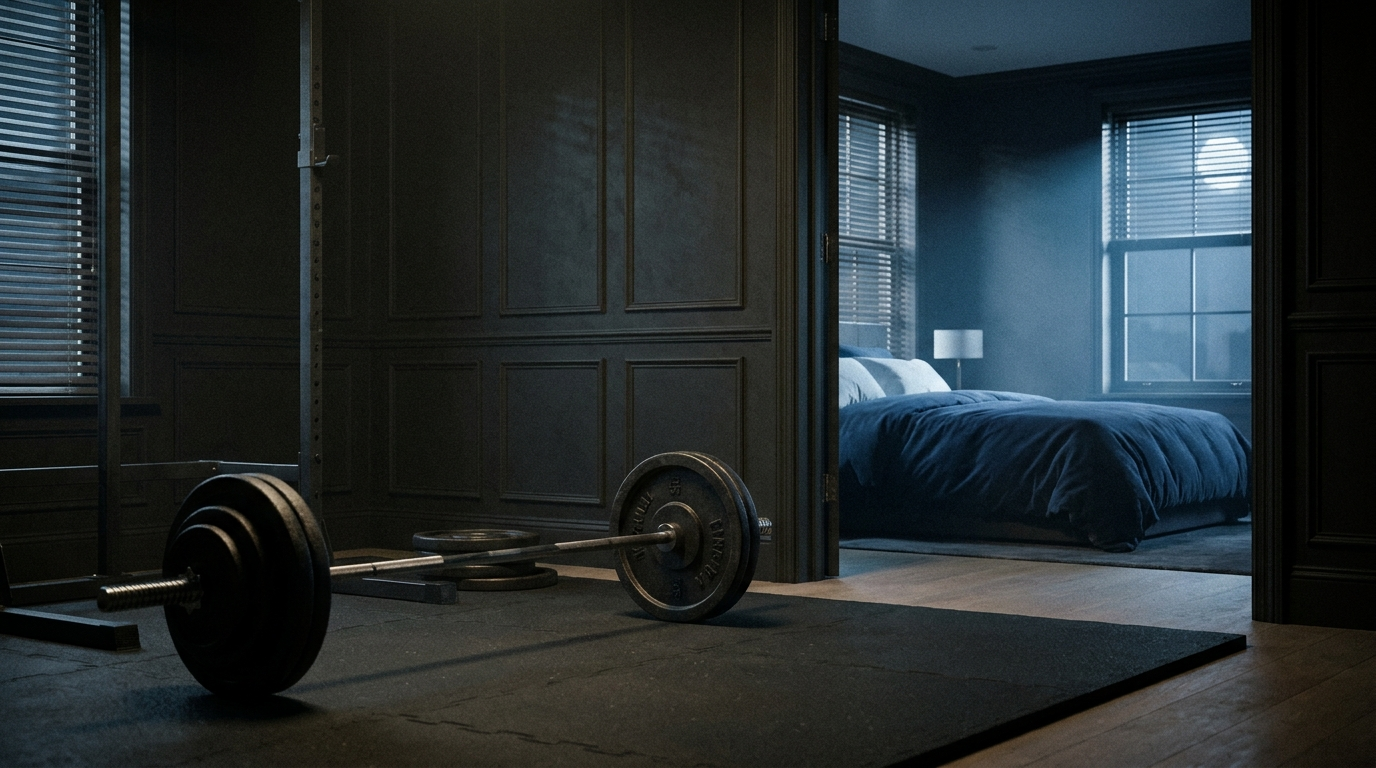
You track your macros. You log your lifts. You own a foam roller shaped like a medieval torture device. And then you undo all of it by sleeping five hours a night with cortisol levels that could power a small city. Welcome to the dirty secret of CBD for athletes: it's not really about the workout at all. It's about what happens — or doesn't happen — after you rack the weights. Training breaks you down. Recovery builds you back. And recovery runs on sleep and stress hormones, two things most athletes are catastrophically bad at managing.
TL;DR — The Short Version
- Muscle isn't built in the gym. It's built during deep sleep, when growth hormone release peaks and your body runs repairs.
- Chronically elevated cortisol works against everything you're training for — it's the hormonal opposite of recovery mode.
- Many athletes use CBD as part of a wind-down routine because it may support relaxation and a calmer nervous system after training.
- CBD was removed from the World Anti-Doping Agency's prohibited list in 2018 — but full-spectrum products contain trace THC, which is still banned. Tested athletes need to read labels like lawyers.
- Consistency beats heroics: a nightly routine matters more than any single supplement.
Your Muscles Don't Grow in the Gym
Here's the part the supplement industry hopes you never internalize: lifting weights doesn't build muscle. Lifting weights damages muscle. The building happens later — mostly at night, mostly during slow-wave sleep, when your pituitary gland releases the majority of your daily growth hormone and your body quietly rebuilds the fibers you shredded at 6 PM.
Cut that sleep short and you're leaving gains in bed — literally. We wrote a whole deep-dive on this in sleep and muscle recovery, but the short version is brutal: sleep-deprived training is like paying a contractor to build your house and then canceling the construction crew every night at 2 AM.
So if you're serious about performance, your recovery protocol matters as much as your programming. Which brings us to the hormone that ruins everything.
Cortisol: The Anti-Gains Hormone
Cortisol isn't evil. You need it to wake up, to push through a hard session, to be a functioning mammal. The problem is chronically elevated cortisol — the kind you get from stacking hard training on top of work stress, doom-scrolling, and 11 PM "one more episode" decisions.
When cortisol stays high into the evening, it works directly against recovery:
- It's catabolic — biochemically, it favors breaking tissue down, not building it up.
- It delays sleep onset and fragments deep sleep, the exact stage where repair happens.
- It keeps your nervous system in "fight or flight" when it should be in "rest and digest."
We covered the full stress-sleep spiral in cortisol and sleep. For athletes, the takeaway is simple: an evening routine that helps you actually downshift isn't soft. It's programming.
Where CBD Fits In for Athletes
This is where CBD for athletes stops being a gym-bro rumor and becomes a reasonable conversation. CBD interacts with your endocannabinoid system — a signaling network involved in how your body regulates stress responses, mood, and sleep-wake cycles. That's why many athletes use CBD in the evening as part of a wind-down routine: it may support relaxation and help quiet the post-training, post-everything mental noise so your body can get on with the repair work.
Let's be blunt about what CBD is not: it's not a painkiller, it's not a medical treatment, and anyone promising it will "fix" your recovery is selling you gas station CBD with a marketing budget. What thoughtful athletes actually report is quieter: an easier time winding down, a calmer head on the pillow, a routine they actually stick to. If you're curious about timing, we broke down how long CBD takes to work — spoiler: take it 30–60 minutes before bed, not as you're turning off the light.
Why Full-Spectrum Matters (CBN and CBG, Too)
Not all CBD is created equal, and athletes tend to figure this out the expensive way. Full-spectrum formulas keep the plant's minor cannabinoids — like CBN, often nicknamed the "sleep cannabinoid," and CBG — which are believed to work better together than any one compound alone. That's the entourage effect, and it's the difference between a formula designed for nighttime recovery and an isolate that's basically expensive hope.
The Drug-Testing Fine Print (Read This Twice)
If you compete in a tested sport, this section is not optional. In 2018, the World Anti-Doping Agency removed CBD from its prohibited substances list. CBD itself: allowed. Here's the catch — every other cannabinoid, including THC, is still prohibited in competition, and legal full-spectrum CBD products can contain up to 0.3% THC. That trace amount is federally legal and won't get you high, but "won't get you high" and "won't show up on a WADA test" are two very different sentences.
Practical guidance for tested athletes:
- Know your sport's rules and your testing body — WADA, NCAA, and individual leagues all differ.
- Only use products with third-party lab reports you can actually read.
- If your career depends on a clean test, talk to your sports organization or a professional before adding any cannabinoid product. Zero BS: no gummy is worth a suspension.
For the non-tested majority — the lifters, runners, weekend warriors, and rec-league legends — trace THC at 0.3% is a non-issue for legality. We explained the whole thing in the 0.3% rule.
Building a Recovery Routine That Actually Works
CBD isn't a magic spell. It works best as one piece of a recovery routine your body can set its clock by:
- Finish hard training 3+ hours before bed. Late-night max effort spikes cortisol and core temperature right when you need both dropping.
- Eat enough, early enough. Under-fueled athletes sleep worse. A reasonable dinner beats a midnight sugar raid — which, yes, also wrecks your sleep.
- Dim the lights, ditch the phone. Your nervous system can't downshift while you're watching training fail compilations at full brightness.
- Take your wind-down dose 30–60 minutes out. Then do something analog: stretch, read, stare wisely into the middle distance.
- Same time, every night. Consistency is the closest thing to a legal performance enhancer that exists.
And if you're wondering whether nightly use is reasonable long-term, we answered that here: is CBD safe to take every night?
Recover Like You Train: Doze Drops
Doctor-formulated for the part of training nobody posts about. Each gummy delivers 50mg full-spectrum CBD + 20mg CBN + 20mg CBG — zero sugar, non-habit-forming, and designed to help you wind down so your body can handle the rebuild.
$29.99 · 30-day money-back guarantee. If it doesn't earn a spot in your routine, it's free.
Frequently Asked Questions
Is CBD legal for athletes?
CBD itself was removed from the World Anti-Doping Agency's prohibited list in 2018. However, other cannabinoids — including the trace THC found in full-spectrum products — remain prohibited in competition under WADA rules, and individual leagues set their own policies. Tested athletes should check their organization's rules and consult a professional before using any cannabinoid product.
When should athletes take CBD for recovery?
Most people take CBD 30–60 minutes before bed as part of a wind-down routine, since sleep is when the body does the bulk of its muscle repair. Consistency matters more than timing perfection — a regular nightly routine is what helps your body downshift on schedule.
Will CBD make me groggy for morning training?
CBD is not a sedative in the way sleep medications are, and most people don't report a morning "hangover" effect at typical doses. Everyone responds differently, though — start with one serving on a night before an easy training day and see how you feel.
Does CBD help build muscle?
No — and anyone claiming otherwise is selling something. Muscle is built through training, adequate protein, and quality sleep. CBD's role is indirect: it may support the relaxation and wind-down process that helps you get the sleep your recovery depends on.
The Bottom Line
The conversation around CBD for athletes isn't about shortcuts — it's about finally taking recovery as seriously as training. Manage your cortisol, protect your sleep, build a wind-down routine you'll actually follow, and let your body do the rebuilding it's been begging to do. Train hard. Wind down harder. Sleep like the dead. Wake up human — and stronger.
These statements have not been evaluated by the Food and Drug Administration (FDA). This product is not intended to diagnose, treat, cure, or prevent any disease. The information provided is for educational purposes only and is not medical advice. Always consult a healthcare professional before starting any new supplement, especially if you are pregnant, nursing, have a medical condition, or take medications. Results may vary. Everwell does not make any health claims regarding its CBD products.